The Art of the Scissor Cut: Why Technique Changes Everything
There's a conversation happening in men's hair that doesn't get nearly enough airtime. Walk into most barbershops and the language defaults quickly to skin fades, guard lengths, and clipper work. These are legitimate skills — but they're not the whole picture. For a growing number of men, the scissor cut is what changes the game. And understanding why is where the real conversation starts.
I came to Hong Kong with a background that was shaped by two things: a thorough technical education in Australia, and then a deliberate decision to go further. That took me to London, and to Mahogany — one of the UK's most respected and technically rigorous salons — where I underwent a six-month vardering programme. A vardering is, in essence, a structured re-education: a commitment to rebuilding your foundation from the ground up, regardless of how long you've already been working. It's not a common thing to do once you're qualified. It requires setting aside what you think you know.
London matters in this context because London is where modern precision cutting was born. Vidal Sassoon's methodologies — the geometry, the sectioning, the understanding of how weight and movement interact — originated there and spread globally. To train seriously in that environment is to engage with cutting at a level most hairdressers never reach.
That foundation is what I bring to every haircut at Bruneblonde.
What scissor cutting actually does
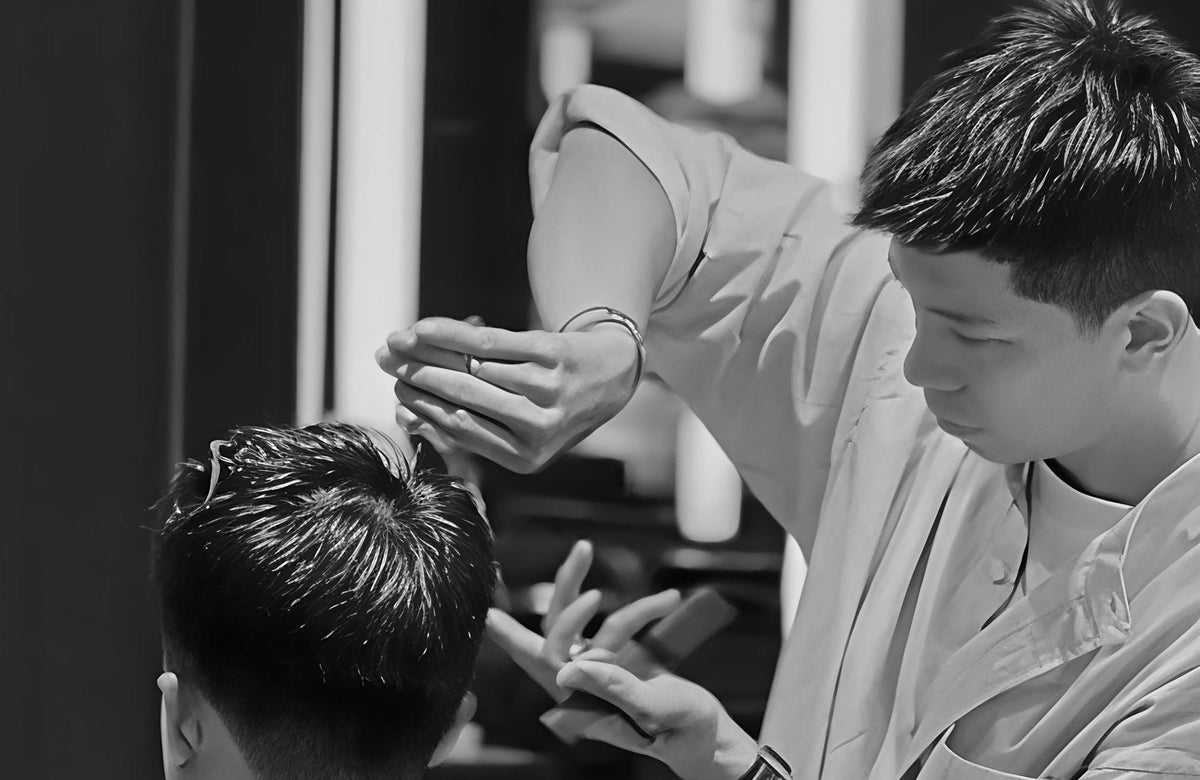
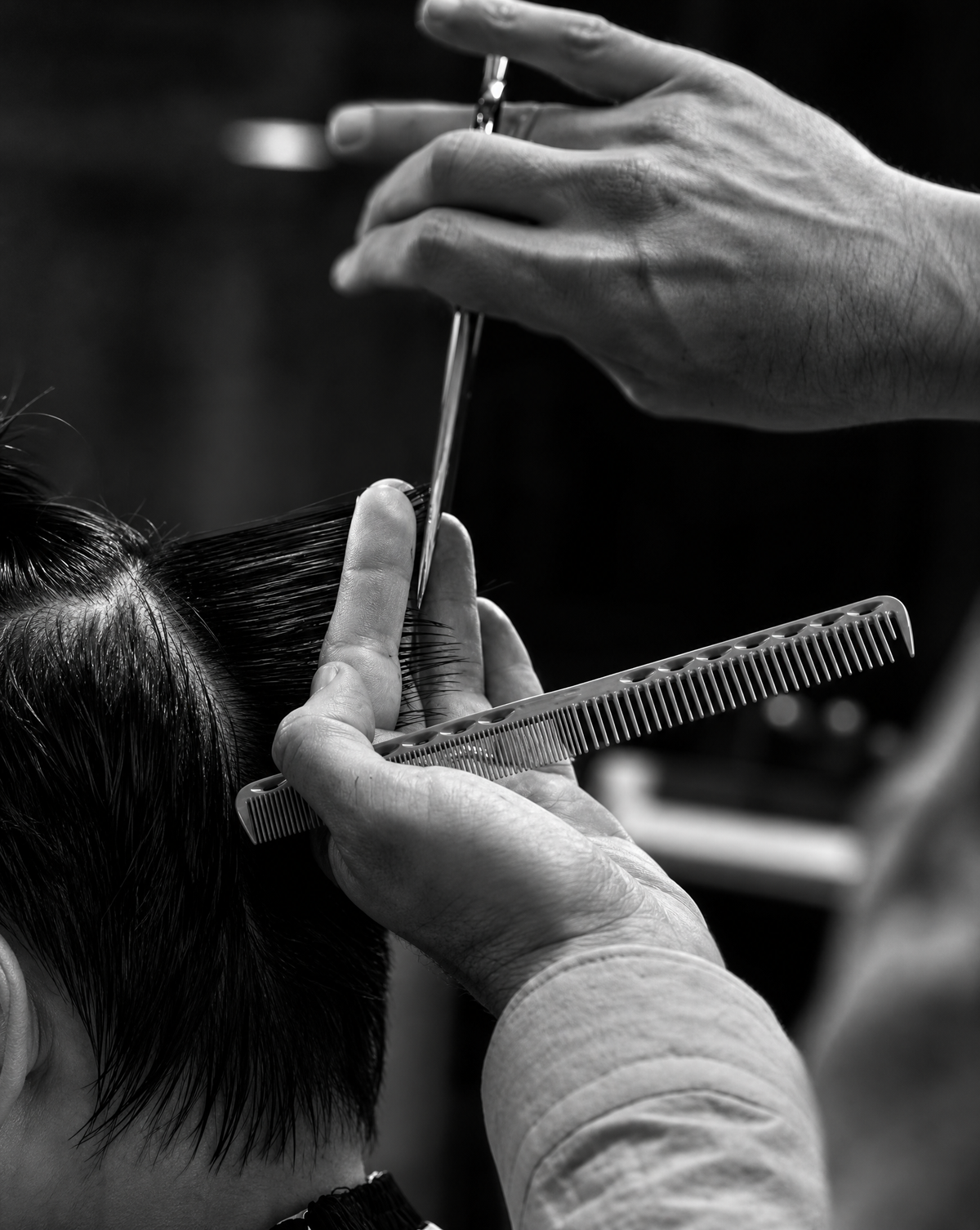
The difference between a scissor cut and a clipper-led cut isn't just aesthetic — it's structural. Scissors give a haircutter control over weight distribution, movement, and texture in a way that clippers simply cannot replicate. A well-executed scissor cut considers not just how the hair looks today, but how it will behave in three weeks, how it grows out over six weeks, and how it sits at every length in between.
Men who have experienced a great scissor cut know the feeling: the hair just works for longer. It holds its shape. It doesn't require a visit every three weeks to stay presentable. The outgrow is clean. That's not luck — it's methodology.
Precision technique means understanding how the head is shaped, how the hair grows, and how to account for both. It means cutting with intention rather than pattern. And it means the client leaves not just looking good today, but wearing the haircut well for weeks to come.
How it shapes the team
As Director of Men's at Bruneblonde, one of the things I'm most invested in is raising the technical floor for everyone working alongside me. Precision doesn't stay in one person's hands — it spreads. When a team works with strong methodology, clients feel it across every appointment, regardless of who holds the scissors.
I'm also in the middle of a deliberate training programme with one of our team members, developing barbering skill from a technical hairdressing foundation — the same pathway I took, just in a different city. The intent is the same: build it properly, or don't build it at all.
A note on who I work with
My role at Bruneblonde carries a men's title, but my work doesn't stop there. I trained as a full hairdresser and colourist, and that's how I continue to practice. The women I work with come for the same reason the men do — precision, a strong point of view on how hair should be cut and why, and a result that lasts. The scissor is the constant. The client in the chair changes.
If you're in Hong Kong and you've been looking for something more considered than a standard clipper cut — something built on real technique — that's what I do.
Appointments at Bruneblonde, Mezz Floor, Grand Hyatt Hong Kong.
Bruneblonde is a premium hair salon located at the Grand Hyatt Hong Kong, 1 Harbour Road, Wan Chai. Hamish Glianos Director of Men's, specialising in precision scissor cutting and colour for men and women.